
Braillo Braille Printers — The Global Standard for True Production Braille
Braillo printers are used by braille production organizations worldwide and have earned a reputation for exceptional quality, outstanding braille readability, and dependable performance since 1980.
More than 40 million people who are blind or visually impaired rely on braille for literacy, education, and independent living. Despite this need, access to braille materials remains limited in many parts of the world.
Braillo is committed to helping expand that access by developing reliable, high-performance braille printers designed for accuracy, durability, and long service life. Our technology produces clear, consistent, standards-compliant braille that readers can depend on, supported by one of the industry’s most comprehensive warranties and a global support network.
For organizations focused on long-term accessibility, Braillo braille printers provide a trusted production solution for serving braille readers everywhere.
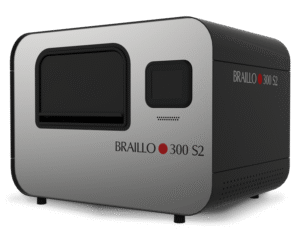
Braillo 300 S2
Braillo 450 S2
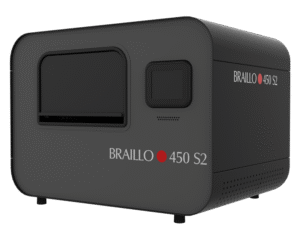
Braillo 450 S2
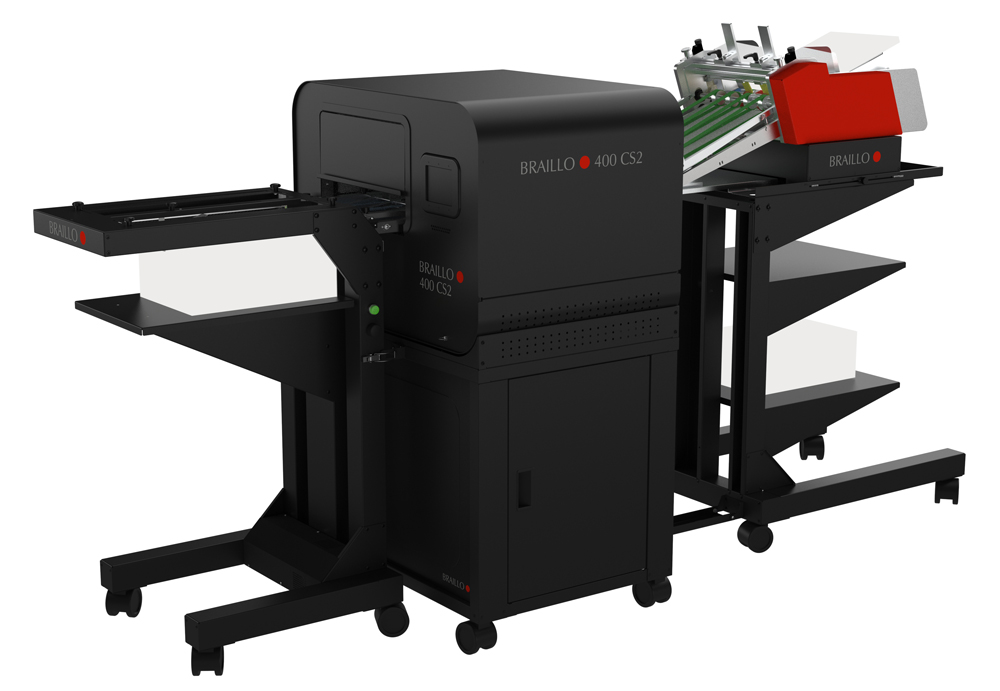
Braillo 400 CS2
The world’s first and only production braille embosser using cut-sheet paper
The Braillo 400 CS2 is the world’s first production braille embosser designed for cut-sheet (single-sheet) braille paper. By combining true production performance with sheet-fed flexibility, it introduces a new approach to braille production—supporting both 2-page-per-sheet (front/back) and 4-page-per-sheet (book, magazine, and newspaper) formats, while eliminating the need for continuous or roll paper and maintaining the performance, consistent braille output, and robust engineering expected from Braillo embossers.
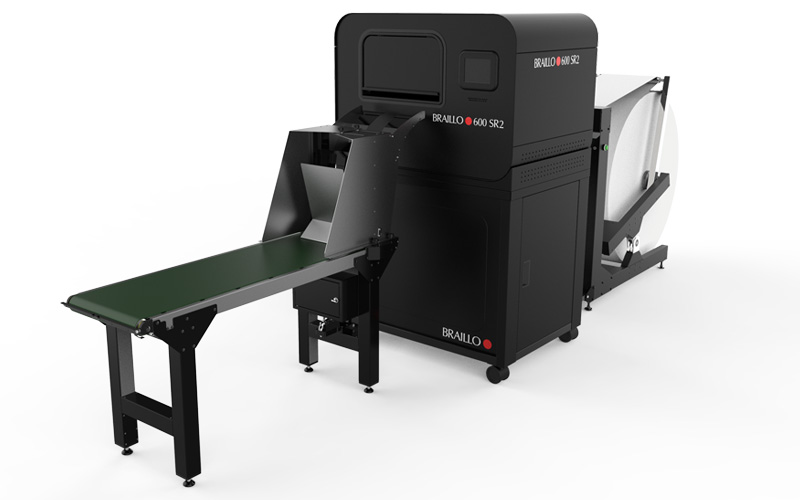
Braillo 600 SR2
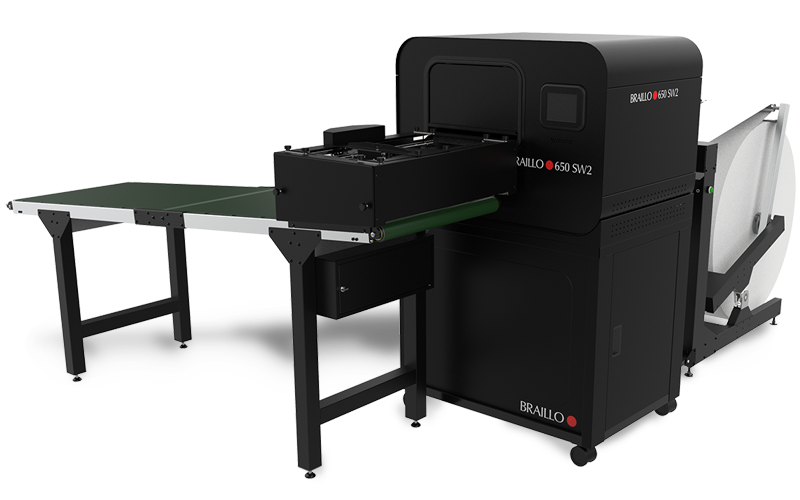
Braillo 650 SW2
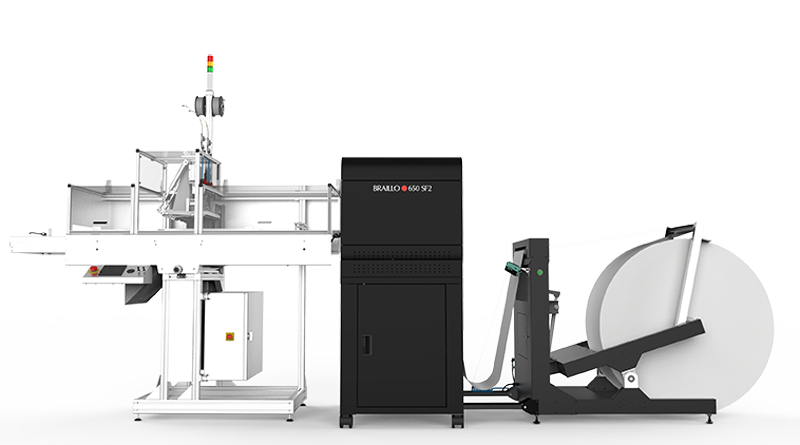
Braillo 650 SF2
Benefits of Investing In Braillo Braille Printers:
True Production Braille Printers
To meet the rigorous demands of high-volume, professional braille production, a printer must be engineered with durable, high-quality components designed for long-term reliability and performance. Braillo stands apart as the only manufacturer of braille printers built to consistently deliver on this standard of excellence. See The Braillo Difference.

Free Duxbury Software
Highest Quality Braille Paper
Since 1988, in collaboration with American Thermoform Corporation, Braillo has manufactured its own custom braille paper, produced in accordance with the highest industry standards. The result is a strong, durable, low-dust, chemical-free paper designed to produce crisp, well-defined braille dots that retain their shape after being read multiple times.
In addition to delivering superior readability, the paper’s exceptional quality also helps reduce wear on your braille printer, contributing to extended equipment life and consistent performance over time. Learn more about our braille paper.

Leading Braille Printer Warranty In the Industry
Braillo’s 4 year printer warranty is the most comprehensive in the industry…
Braillo covers the first 3 years
For all Braillo models, the standard warranty covers any defective mechanical and electrical component from the date of delivery throughout the first three years, or up to 8,000 hours – whichever comes first. This amounts to up to 15.6 million braille pages. By the time most printers have become obsolete or stopped working, Braillo braille printers are still under warranty!
Braillo adds an additional 1 year for using Braillo/ATC braille paper
Braillo will offer an additional 1 year to the standard warranty by using Braillo/ATC braille paper. The use of poor quality braille paper often causes excessive wear and tear on a printer, which causes parts to fail prematurely. Using Braillo/ATC’s specially formulated braille paper will help ensure these risks are minimized.
This brings the total warranty to 4 years, or up to 10,700 hours and 20.8 million printed braille pages.

World Class Support
Braillo provides comprehensive global support through multiple channels, including telephone, video, email, YouTube tutorials, and on-site service performed by either Braillo staff or our network of factory-trained technicians worldwide.
In addition, Braillo hosts training sessions and Braille workshops around the world throughout the year, ensuring users have access to expert guidance and hands-on learning opportunities
The Braillo Difference
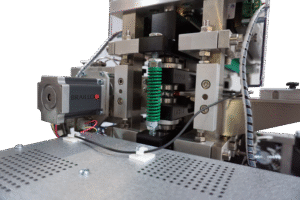
Compare the quality of Braillo parts and components vs. other manufacturers
What Is a Braille Printer?
A braille printer is a specialized device that produces raised tactile dots on braille paper, enabling individuals who are blind or visually impaired to read by touch. The terms braille printer and braille embosser are often used interchangeably.
For high-volume braille production, Braillo has been the leading manufacturer since 1980, offering printers designed for continuous operation, precise dot formation, and long-term reliability. Organizations worldwide rely on Braillo printers to produce textbooks, exams, official documents, and accessible literature.
Desktop vs Production Braille Printers
Desktop Braille Printers
Desktop printers are typically used for:
-
Personal projects
-
Classroom or small-scale production
-
Short-run documents
They are ideal for light usage but are not designed for sustained production or high-volume workloads.
Production Braille Printers
Professional organizations require printers built for continuous, high-volume production.
Braillo production braille printers provide:
-
Consistent braille dot quality
-
Long-term operational reliability
-
High-volume output with minimal downtime
Many Braillo printers remain in service after decades of use, producing millions of braille pages with exceptional quality.
Braille Quality and Standards
Producing readable braille requires uniform dot height, precise alignment, and consistent spacing.
Braille standards are set by organizations such as:
-
National Library Service for the Blind and Print Disabled (U.S.)
-
Braille Authority of North America (BANA)
These standards typically require a minimum dot height of 0.48 mm.
Braillo printers meet or exceed these standards, ensuring consistent quality. Sample pages are recommended to verify braille output before purchasing a printer.
Paper Handling in Production Braille
Reliable paper handling is critical for efficiency:
-
Tractor-feed paper ensures precise alignment for long print runs
-
Roll-feed paper allows extended runs with reduced paper changes
- Cut sheet paper is easy to source, doesn’t have perforated edges, and can be pre-punched with binding holes
Using high-quality braille paper ensures the raised dots remain durable and readable over time.
Translation Software for Braille Printing
Accurate braille output requires professional translation software. Tools such as Duxbury Braille Translator ensure:
-
Correct braille contractions
-
Proper punctuation and formatting
-
Support for multiple languages and braille grades
Braillo printers include Duxbury with every purchase, and are fully compatible with other translation softwares, enabling organizations to maintain high-quality, error-free braille production.
Why Choose Braillo for Production Braille
From developing the world’s first high-speed interpoint braille printer in 1980 to modern production models, Braillo has consistently led the industry.
Organizations that use Braillo printers gain:
-
Proven durability and long service life
-
Industry-leading braille quality
-
Global technical support
For organizations seeking a trusted production solution, Braillo remains the global leader.
Supporting Accessibility Through Braille Printing
High-quality braille printers help schools, libraries, government agencies, and publishing houses expand access for individuals who are blind or visually impaired.
Braillo printers support the production of:
-
Educational textbooks
-
Exams and official documents
-
Braille literature and magazines
With reliable printers, professional translation software, and proper paper handling, organizations can produce braille efficiently and sustainably.
FAQ’s
Q1: What is the difference between a desktop braille printer and a production braille printer?
A: Desktop braille printers are designed for occasional or personal use, while production braille printers, like those from Braillo, are built for high-volume, continuous operation with consistent quality and durability.
Q2: What is a braille embosser?
A: A braille embosser is the technical term for a device that creates raised dots on paper. It is used interchangeably with “braille printer” though both refer to the same technology.
Q3: Why is Braillo considered the authority in production braille printers?
A: Braillo has led the industry since 1980, pioneering high-speed braille printers. Their printers are known for durability and consistent braille quality, making them the standard for production environments.
Q4: What type of paper is used in production braille printing?
A: High-quality braille paper, typically 140–150 GSM (100 lb stock), is used to ensure durable, readable dots. Production printers tractor-feed, roll-feed and cut sheet formats for reliability during high-volume printing.
Q5: Can older Braillo printers be upgraded?
A: Yes. Braillo braille printers can be updated with modern electronics, new features, and speed enhancements, extending their service life and maintaining production efficiency.